




If you've ever been intimidated by the small paper label that's wrapped around the most beautiful yarn skein you've ever touched, don't fret! I am here to teach you everything you need to know to read a yarn label! When you finish reading this post you will more confident on how to read yarn labels and your knitting and crocheting will be easier. Yarn labels explained: Everything you need to know to read a yarn label.
All those symbols and numbers can make your heart beat even faster than the yarn itself but I promise it gets easier and it's nothing you can't learn. Even I did, so you have that going for you, lol!
In my opinion, knowing what information a yarn label holds, will help you shop with more intend and will minimise the frustration of getting a yarn that doen't cover your knitting or crocheting needs. It's a money saver too and it helps keeping your stash contained with only yarn you'll actually use.
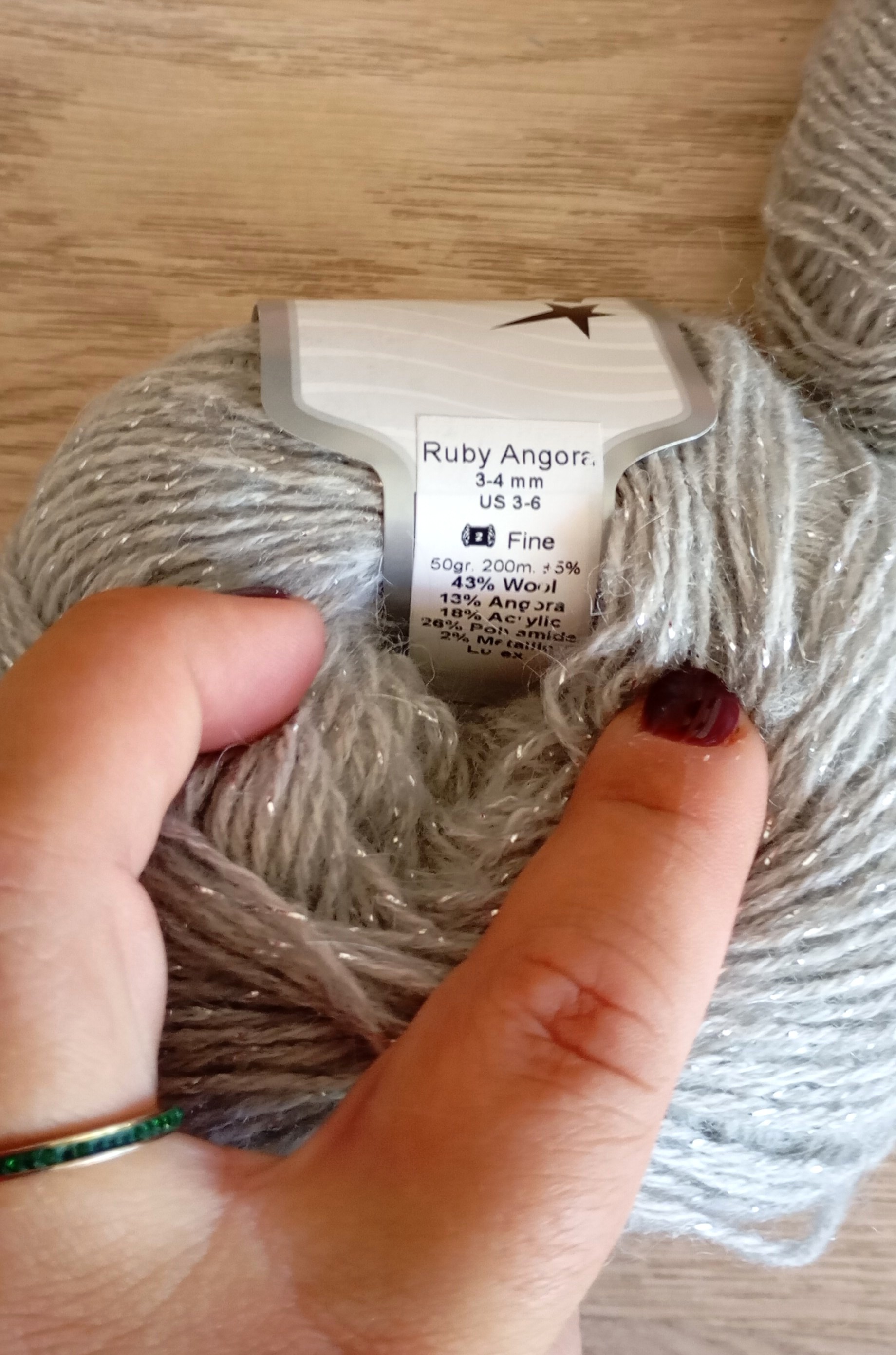
What information can you find on a yarn label?
Yarn labels can look slightly different from one brand to another, but most contain the same basic information.
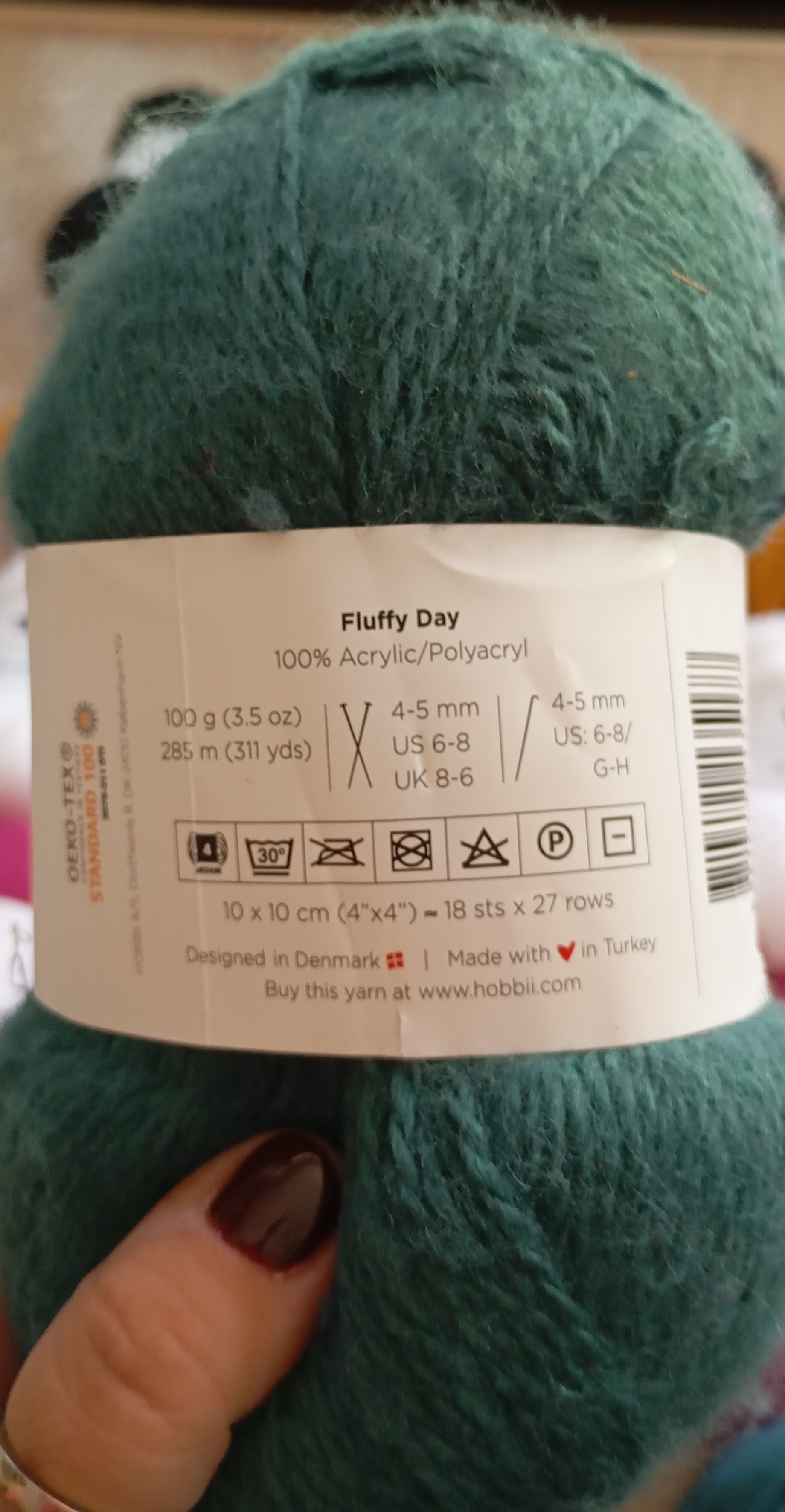
You will usually find:
-
Brand and yarn name
-
Fiber content
-
Yarn weight
-
Weight of the skein
-
Yardage or meterage
-
Recommended knitting needle size
-
Recommended crochet hook size
-
Gauge information
-
Color name and number
-
Dye lot number
-
Care instructions
-
Sometimes the number of plies
You don't need to memorize everything.
Once you know what each section means, you can simply look at the label and find the information you need.
1. Fiber content: What is the yarn made of?
One of the most important things on a yarn label is the fiber content.
You might see:
100% cotton
or:
80% wool / 20% nylon
or:
70% acrylic / 30% wool
The percentages tell you exactly how much of each fiber is used in the yarn.
Why does fiber content matter?
Because different fibers behave very differently.
Cotton is generally cool, durable and has very little stretch. It gives excellent stitch definition, which makes it particularly useful for crochet bags, summer garments, home decor and amigurumi.
Wool is warm, elastic and has natural spring. It is wonderful for sweaters, hats, scarves and other winter projects, but some wool yarns require special washing.
Acrylic is affordable, widely available and easy to care for. It is a popular choice for blankets, accessories and beginner projects.
Alpaca is soft and warm, often with a beautiful drape.
And then there are blends, which combine different fibers to achieve specific characteristics.
For example, adding nylon to wool can increase durability, which is why wool/nylon blends are common in sock yarn.
So when choosing yarn, don't just stay at the color.
The fiber content can tell you a lot about how your finished project will feel, stretch, drape and behave.
2. Yarn weight: How thick is the yarn?
This is one of the most confusing parts for beginners because yarn weight does not mean how heavy the ball is.
It refers to the thickness of the yarn strand.
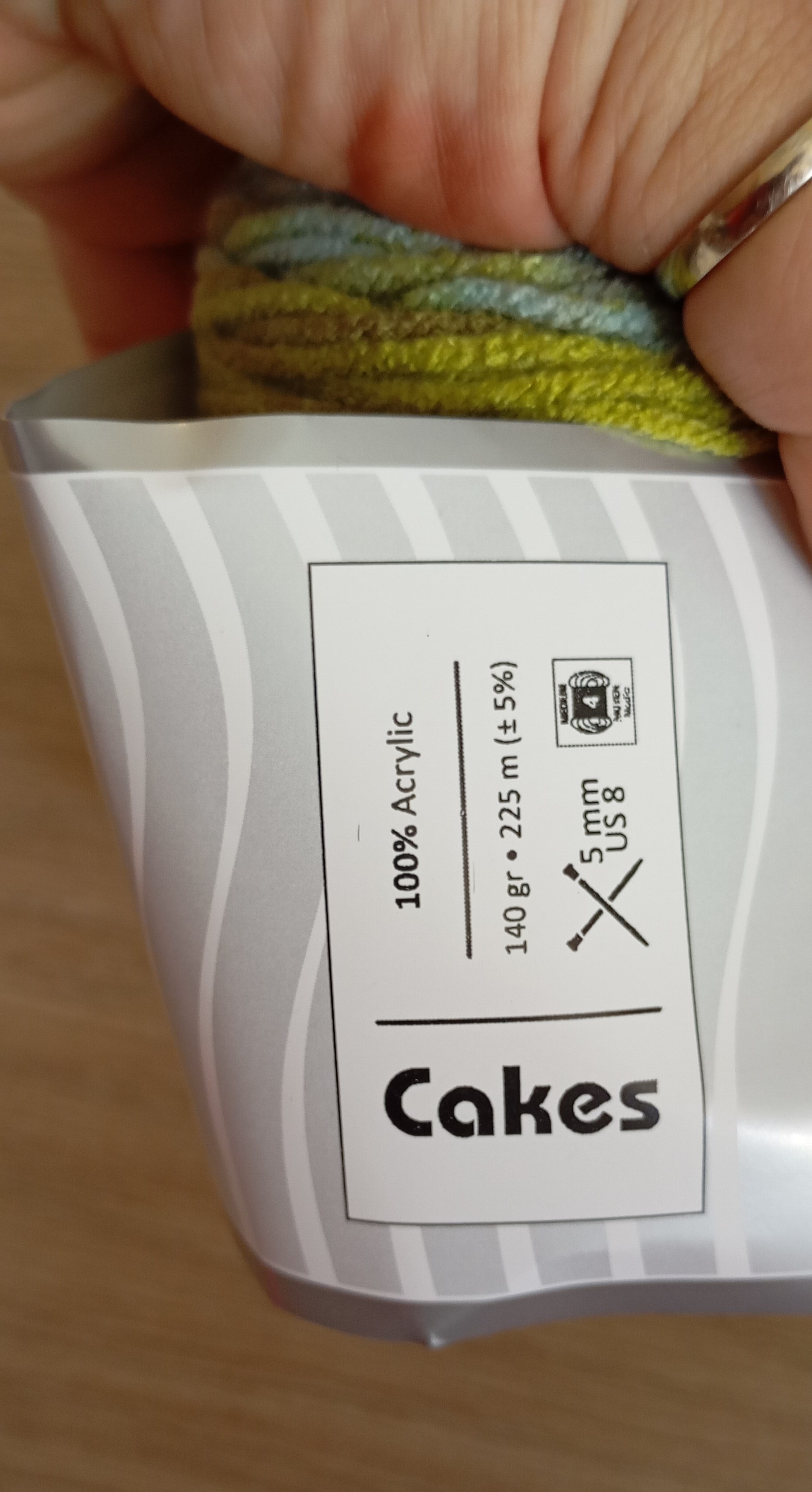
You may see a little skein symbol with a number inside it, usually from 0 to 7. This is part of the Standard Yarn Weight System.
The general categories are:
| Number | Weight | Common Names |
|---|---|---|
| 0 | Lace | Lace |
| 1 | Super Fine | Fingering, Sock |
| 2 | Fine | Sport |
| 3 | Light | DK, Light Worsted |
| 4 | Medium | Worsted, Aran |
| 5 | Bulky | Chunky |
| 6 | Super Bulky | Super Chunky |
| 7 | Jumbo | Jumbo |
The exact terminology can vary between countries and brands, so don't rely on the name alone.
The number, the recommended gauge and the actual yarn itself are all useful when comparing yarns.
Why is yarn weight important?
Because it has a huge effect on the final size and appearance of your project.
If a crochet pattern calls for a #4 medium-weight yarn and you use a much thinner #2 yarn, your finished project will be considerably smaller.
That's why matching yarn weight is one of the first things you should check when choosing a substitute.
3. Grams vs. meters/yards: How much yarn is actually in the skein?
A yarn label will usually give you two measurements.
For example:
100 g / 200 m
or:
3.5 oz / 218 yd
The grams or ounces tell you how much the ball weighs.
The meters or yards tell you how much yarn you actually have.
And when you're trying to figure out whether you have enough yarn for a pattern, the length is often the more useful number.
For example, imagine a pattern requires approximately 600 meters of yarn.
Your yarn has:
100 g = 200 m
You would need:
600 ÷ 200 = 3
So you would need at least 3 balls.
Always round up rather than down. Running out of yarn with half a sleeve left to knit is one of life's less charming surprises and will definitely make you a looser in the yarn chicken game.
Why can't I just compare grams?
Because 100 g of one yarn does not necessarily contain the same length as 100 g of another.
A thick yarn will generally contain fewer meters per 100 g than a thin yarn.
When substituting yarn, compare meters/yards as well as yarn weight.
4. Recommended crochet hook size
Many yarn labels include a small crochet hook symbol with a recommended size.
You might see something like:
Crochet hook: 4.5 mm
or:
US 7 / 4.5 mm
This is the manufacturer's suggested starting point for working with that yarn.
But here's something important:
The recommended hook size is not a rule.
You can use a different hook size depending on the project.
For example, you may want a smaller hook for amigurumi because you need a firm fabric with very small gaps between stitches.
For a loose, drapey shawl, you may intentionally use a larger hook.
So think of the hook size printed on the label as a starting point, not a must.
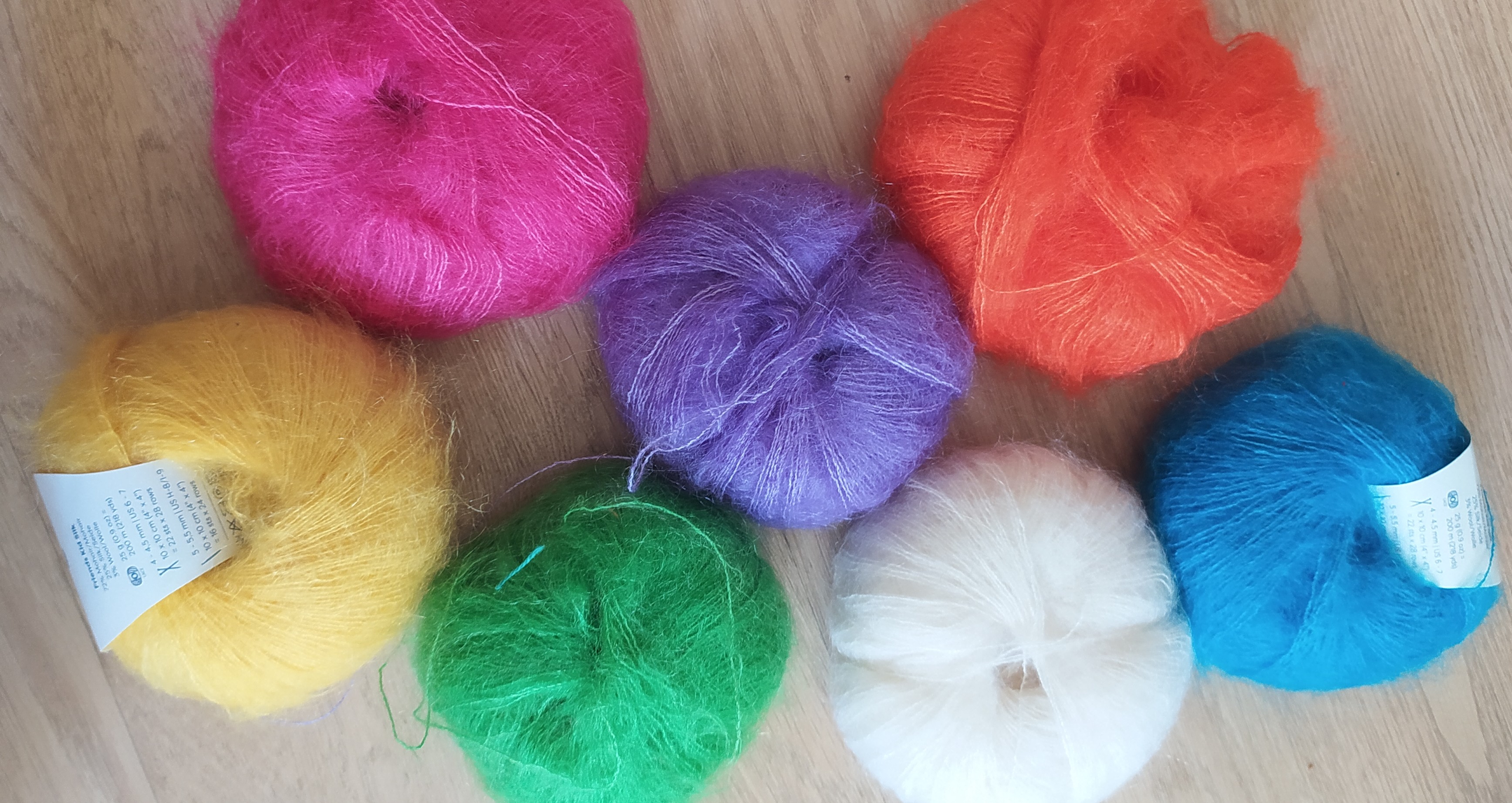
5. Recommended knitting needle size
If you knit, you'll usually find a similar recommendation for knitting needles.
For example:
4.0 mm needles
The label may also provide the equivalent US needle size.
Again, this is only a starting point.
Your pattern's gauge is ultimately more important than the number printed on the yarn label.
6. Gauge: What is that?
This is probably one of the most useful pieces of information on the label once you understand it.
You might see something like:
18 sts x 24 rows = 10 x 10 cm
or:
20 sts x 28 rows = 4 x 4 in
This is the manufacturer's suggested gauge using a particular needle or hook size.
For knitting, the label often gives a gauge based on stockinette stitch.
For crochet, it may specify a particular stitch, such as single crochet.
However, the gauge printed on the yarn label is not necessarily your gauge.
Everyone has a different tension.
Some people crochet tightly. Others crochet loosely. Some of us apparently change tension depending on our mood or how tired our hands are.
That's why, when gauge matters, you should make a swatch using the stitch and hook/needle specified by the pattern. Every pattern has a gauge and there you'll find the needle/hook size needed to get it.
7. Color name and number
Yarn labels usually tell you the name of the color and often give it a number.
For example:
Color: Mustard
Color No: 23
This is particularly useful when you want to buy the same yarn again.
The color number is often more reliable than the color name because names can be reused or translated differently.
So if you find a color you love, take a photo of the label or keep it somewhere safe.
Your future self will thank you when you need another skein six months later.
8. Dye Lot: A small number with a great significance
If you're buying several skeins of the same color, look for the dye lot number.
A dye lot identifies the batch in which the yarn was dyed.
Even when a manufacturer uses exactly the same dye recipe, there can be small differences between dye batches.
That means two balls that are both labelled "Dusty Rose" may look slightly different if they come from different dye lots.
This is especially noticeable when you place them next to each other in a large project.
My advice?
If you're buying several skeins for one project, try to buy them all from the same dye lot.
And if you're making something large, such as a blanket or sweater, buy enough yarn at the beginning whenever possible.
The Craft Yarn Council specifically recommends checking dye lot numbers when purchasing multiple skeins for a project.
9. Care symbols: How should you care for your finished knits?
Those little laundry symbols are really very important!
They tell you how the yarn, and therefore your finished project, should be cared for.
You may see symbols for:
-
Washing
-
Hand washing
-
Bleaching
-
Tumble drying
-
Air drying
-
Ironing
-
Dry cleaning
The washing symbol
A tub symbol indicates washing instructions.
A number inside the tub indicates the maximum washing temperature.
A hand inside the tub means hand washing.
The triangle
This relates to bleaching.
If you're unsure, don't bleach your handmade project.
The square
This relates to drying.
A square containing a circle indicates tumble drying.
Lines within the square provide additional drying instructions.
The iron
The dots indicate the maximum ironing temperature.
More dots generally mean a higher permitted temperature.
The circle
This indicates professional dry cleaning instructions.
These symbols follow standardized textile-care conventions and are an important part of the information provided on yarn labels.
10. What does ply mean?
You may also see something like:
3 ply
or:
4 ply
Ply refers to the number of individual strands twisted together to form the yarn.
Historically, ply was often used to describe yarn thickness.
However, ply is not a reliable way to determine modern yarn weight.
A 4-ply yarn is not automatically the same thickness as another 4-ply yarn.
Two yarns can have the same number of plies but very different thicknesses.
When choosing yarn for a pattern, look at the yarn weight, gauge and meterage, rather than relying on ply alone.
11. How to use the yarn label when substituting yarn
This is where everything we've just discussed becomes really useful.
Let's say your pattern calls for:
100 g / 200 m of DK weight cotton
You find another yarn that looks perfect.
Before buying it, check:
1. Fiber content
Is it cotton? Wool? Acrylic? A blend?
2. Yarn weight
Is it also DK or approximately the same thickness?
3. Meterage
How many meters are in each ball?
4. Gauge
Can you achieve the gauge required by the pattern?
5. Care instructions
Will the finished item need the same type of washing?
Don't just look at the number of balls.
Instead, compare the total meterage.
If your pattern requires 400 meters and your substitute contains 200 meters per ball, you need two balls.
If another yarn contains only 120 meters per ball, you'll need more.
This is one of the easiest ways to avoid not buying enough yarn.
12. An Example
Let's say you have a yarn label that says:
100% Cotton
100 g / 170 m
Weight 4 – Medium
Crochet Hook: 5 mm
Gauge: 14 sc x 16 rows = 10 x 10 cm
Color: Sage
Dye Lot: 12345
What does that tell you?
100% Cotton
The yarn is made entirely from cotton.
100 g
The ball weighs 100 grams.
170 m
There are 170 meters of yarn in the ball.
Weight 4 – Medium
The yarn falls into the medium weight category.
5 mm hook
This is the manufacturer's suggested crochet hook size.
14 sc x 16 rows
Using the recommended hook and stitch, the manufacturer expects approximately 14 single crochet stitches and 16 rows within a 10 x 10 cm area.
Sage
That's the color name.
Dye Lot 12345
If you buy more balls for the same project, look for this same dye lot.
Suddenly that tiny label doesn't look quite so mysterious.
13. What information matters most for knitters/crocheters?
If you're standing in a yarn shop and don't have time to read every tiny detail, I would check these five things first:
1. Fiber
Will this fiber work for my project?
2. Yarn weight
Is the yarn the right thickness?
3. Meterage
Do I have enough yarn?
4. Gauge / hook size
Can I achieve the gauge my pattern requires?
5. Care instructions
Can I wash the finished item the way I need to?
Then check the dye lot if you're buying multiple skeins.
That's really the core information.
14. Hold on to your yarn labels!
Here's a habit I strongly recommend.
Keep the yarn label until your project is completely finished.
Even better, keep it in their project bag along with the gauge sample that has a handwritten label with the needle size you used. Ask me how many times I took the needles off of the wip and when I got back to it, I've forgotten the needle size I used. This can also be solved by taking photos of the label and the needle with the size shown.
A yarn label is basically a tiny instruction manual for your yarn.
You don't need to understand every number before you can start crocheting or knitting. But knowing how to read the basics will make choosing yarn, substituting yarn and planning projects much easier.
And the next time you pick up a beautiful skein because you absolutely need that color, take a few seconds to turn it around and read the label too.
The color may get you to the checkout.
The label is what helps you make sure you actually bought the right yarn.
Happy crocheting and knitting!